Advent Reflections for Methodist Recorder – written by Philippa Hill (Vice-Chair) and Ruth Dawson (Media and Safeguarding Lead Trustee), both from NWED and on behalf of MWiB The Advent reflections can be downloaded here but if you are using them please credit Philippa Hill & Ruth Dawson as authors and that they were first published in the Methodist Recorder Advent reflections for Methodist Recorder 2026
Week 1 – Watching and Waiting – Mark 13:24-27
 (Photo by Oliver-David Gascon on unsplash)
I wonder how many of us over a certain age, at this time of year, reminisce about the traditional advent calendars that we received, often with glitter that went everywhere, but none contained chocolate, coffee, cheese or various gifts depending on the fad of the week, they certainly didn’t come with the price tag that many carry today. Yet the principle behind them was exactly the same – the excitement of the count down, opening each door as Christmas got closer until on the 24th, and invariably behind the largest door, we found the picture of the baby that we had been watching and waiting for.
Today, on the first week of Advent we are reminded to be alert to the signs of Christ’s coming – the reading provides us with an opportunity to look for signs that Jesus is near and to recognise those signs that can sustain our hope. Advent nowadays is a time made hectic by the commercialism of Christmas preparations and yet it can still be a time of watching and waiting – a delicate balance of thinking lovingly and generously about the people we care for, rejoicing with friends as we write and read their cards, but remembering as we get caught up in everyone’s urgency and planning it is often difficult to remain focussed on the vigil, but the watching and the waiting can reinforce for all of us an openness to God’s love. However, in all the urgency and chaos of the Christmas season and it’s build up, we do have an opportunity to guide people who have strayed to return to the church – or to even give to those who have never encountered God, the invitation to come, to share and to learn from each one of us. In our fractured and dispersed society, advent can be used as a type of vigil – an opportunity to remember that we are all God’s people and we need to demonstrate in all we do and say that we are waiting and longing for His return.
The early Christian community of Marks gospel experienced some hard and difficult times – rebellions were crushed, temples were destroyed and the people could become desolate – but they were encouraged by recalling Jesus’ words – ‘my words will not pass away’ – we can learn much from those early Christian followers who continued to believe and wait – our world can also feel desperate as we live in times of suffering and hardship but we can use this time of advent to prepare and look anew at our lives – we need to learn how to look for visible signs of hope in a time of chaos, darkness and danger. Advent for us is a time of dark nights, colder weather, leaves falling from the trees and an ending to the greenery and health of harvest. We can all learn valuable lessons from the ongoing cycle of nature with its small but significant changes – Mark used the analogy of a fig tree again to demonstrate the changing of the seasons although he was referring to the growth of new buds and twigs. Advent is a good time to examine our barren areas, to acknowledge things that have passed away, people who have died or things that have ended.
The advent journey is an opportunity for us to assess our faith and our own journey in life. The later story that Jesus tells in the passage from Marks gospel describes a man who leaves his slaves in charge when he goes on a journey. They are to be active and vigilant – there will be no message to announce his return but, in his absence, things must carry on as usual so that when he returns all will be ready for him – this is a reminder to us that if Jesus called tomorrow we need to be ready. We are not going to get a warning that He is on His way – we need to vigilant at all times. And while watching and waiting we need to prepare …………………………
Philippa Hill (Vice-Chair, Methodist Women in Britain)
Week 2 – Prepare the Way – Mark 1: 1-8
 (Photo by Kevin Schmid on unsplash)
I’m really sorry to do this to you all but you know how when you hear a tune and it gets stuck in your head – an ‘earworm’ that you are continually singing and can’t get rid of – well I think I’m about to give you one now!! Every time I hear this passage from the book of Mark, then the music from Godspell gets stuck on repeat in my head ‘Prepare ye, the way of the Lord……….’ – I guarantee you are all going to be singing it for days now………
So here we are looking forward and preparing for the birth of Jesus and yet in this passage we move forward 30 years and hear those words – the beginning of the good news of Jesus Christ. And this is where we hear the words that John quotes from the book of Isaiah ‘Prepare the way of the Lord, make way, make the way straight’. Preparing for the Messiah that had been prophesised for so many years and will have been the foundation of the Jewish faith at that time – the people were brought up on the teachings of Isaiah and will have been waiting expectantly for the coming Messiah. Living in exile the people of Israel became acutely aware of their nations need for good leadership justice, integrity and peace and within the book of Isaiah we can frequently sense their longing as they look forward to God providing what they know they need. This prophecy was to be fulfilled with justice, peace and love of the Kingdom of God proclaimed by Jesus and is still growing throughout the entire world.
John is preaching that radical message to each one of us: we need to take this opportunity to prepare for the King to come and advent is an opportunity for us to reset our minds, to change direction, to see where things are going wrong and make plans to how we can change. If John the Baptist was here today I think he’d be saying the same things to us now as he said then – to change what we are doing wrong, start living the way we should, look after the people of Gods Kingdom – John was challenging the leaders of the day – in the same way that we need to challenge today, therefore looking after the Kingdom of heaven right here and right now.
John the Baptists message of repentance and preparation once again reminds of the urgency for people sorting their lives out since the coming of the Messiah was imminent and they wanted to put things right and be ready – which is no different for us today. Do you recollect a number of years ago when we had the campaign ‘Jesus is the reason for the Season’ – I feel we need to remember that more than ever – that in the middle of all the busyness of advent that we keep Him at the centre as we prepare as John has asked us to do – let us set the road straight and prepare the way for the coming Messiah.
Philippa Hill (Vice-Chair, Methodist Women in Britain)
Week 3 – The Greatest Gift of All, Hope Isaiah 61: 1–4, 8–11
 (Photo by Nigel Hoare on unsplash)
Some of us may find looking for hope almost a hopeless cause in the world in which we currently live in. The list of male celebrities being sought for abuse against women continues to grow, women who whistle blow are vilified. Conflict continues across the globe, with children being bombed, left without food or water, left without families or with terrible injuries. Wild politics appears to be growing in certain places with Christian Nationalism groups bearing down on women and children, being left without options, without control on their own lives or bodies, without hope for their futures.
We read in Isaiah that we are called to give the good news to the poor, the prisoners and comfort all who mourn – perhaps such overwhelming tasks in this world!
How then do we offer comfort, how do we find the hope for the future. Leo Tolstoy’s short story about a cobbler entitled ‘Where Love is, God Is’ might enable us to see in the unseen. Martin Avdeitch is a humble, pious shoemaker who works out of a small basement room with a single window facing the street. He suffers several deep personal tragedies, the loss of his wife and all his children. On the death of his young son Martin falls into the darkness and questions God.
A visiting old man advises Martin to stop grieving for himself, read the New Testament and live for God.
Marting dozes off whilst reading the Gospels one evening and hears a voice in a dream telling him to look out into the street, for Christ will come to visit him.
Martin anxiously watches the pavement from his basement window, recognising people by their boots and shoes. He invites a freezing old soldier named Stepanitch inside to warm up with hot tea. He notices a poor, thinly clad young mother with a baby out in the cold, he invites them in feeding them and giving the young mother his own winter coat. He breaks up a dispute between an old apple-woman and a boy who stole an apple, helping them to reconcile.
That evening as Martin sits, disappointed that Jesus never appeared, a quiet voice reminds him of the scripture: ‘in so much as ye have done it unto one of the least of these my brethren, ye have done it unto me.’
As visions of the young mother and child, Stepanitch and the apple woman flash before him, he realises Christ did visit him, through the poor and struggling people he helped.
How then do you answer the quiet voice, reminding you of all God has given, even in the cruellest of times. How do you, how can you enact the hope which comes to us all at Christmas even in the darkest moments? Perhaps if we all looked carefully in the smallest acts of our days, we would see Christ at work in those around us, sitting there beside each of us, bringing love to each of our encounters, bringing hope to all whom we meet.
Ruth Dawson (Safeguarding & Media Lead Trustee Methodist Women in Britain)
Week 4 – Accepting the Challenge – Luke 1: 26-38
 (Photo by Jametlene Respk on unsplash)
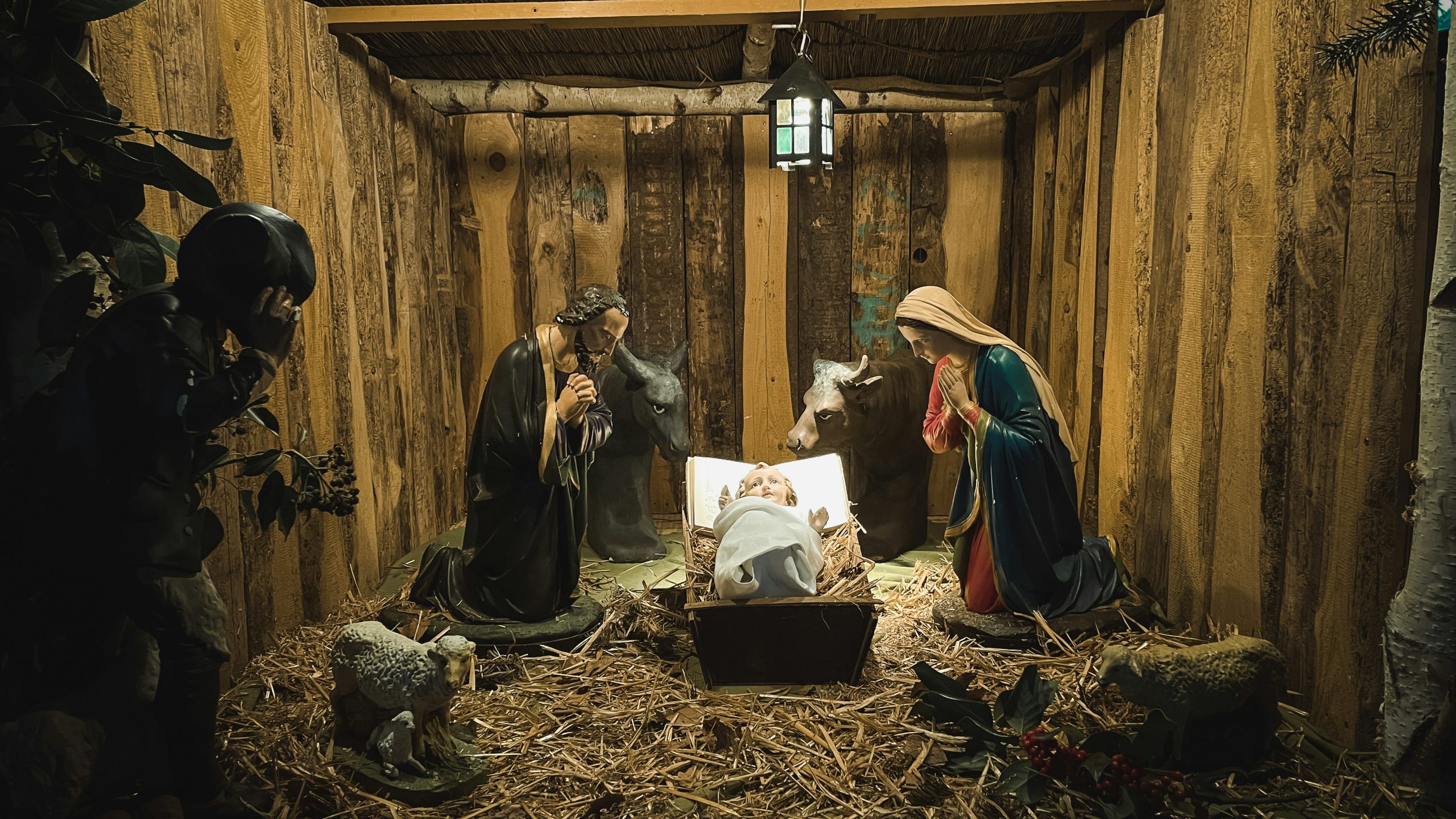
‘I am the Lord’s servant, Mary answered, may your word to me be fulfilled’
Mary said yes to perhaps one of the greatest challenges of all time. To be the mother of God! She accepted though afraid. She accepted through her faith. She accepted just as she was.
How would any of us have accepted such a challenge, wholeheartedly, without any research, without knowing the pros and the cons? Just pure faith in God.
Have you been called to do something you might feel is impossible or perhaps impractical to the world in which you live.
During advent 2022 one of our Trustees in MWiB Debs Coggrave accept a challenge with a few days’ notice to represent MWiB and the Connexion at the Evangelical Methodist Church of Bolivia’s Assembly 15th – 17th December and to visit Tabitha House a women’s refuge centre supported by MWiB since 2017. In her fabulous reflection on her journey – An Unexpected Advent Journey, Debs had said she was determined to have a different advent this year, not the usual hectic last-minute hustle and bustle. Debs had answered a call from Hilary Evans who asked if she was available for a last-minute opportunity to attend Bolivia. Within days, Debs had been accepted and the necessary 3 flights were confirmed, passport and vaccinations were in order and Debs flew out of Teesside on 12th December to arrive in the early hours of the 13th December in La Paz Bolivia. Debs not only had an amazing time but brought much to all the women she met and back to all of us in MWiB with her adventures and updates on Tabitha House. (Her full story was published in the Methodist Recorder or can be read in the MWiB Newsletter – contact communications.mwib@gmail.com for details).
Would you have put your life on hold at such short notice for an opportunity to share in the word of God across the miles? Would you accept the challenge of advent as Mary accepted the very first challenge to bring us that first advent… Will you accept the challenge that lies before us once the song of the angels is stilled?
When the song of angels is stilled is a celebrated poem titled ‘The Work of Christmas’ written by the highly influential African American theologian, philosopher and civil rights leader Howard Thurman. Published in his 1985 book The Mood of Christmas and Other Celebrations, the piece explores the profound intersection between festive joy and the actionable duties of spiritual discipleship. The background, intent and cultural impact of this text highlight its enduring legacy:
The Author & his Vision: A civil rights mentor Howard Thurman (1900 – 1981) was a pivotal figure in the American Civil Rights Movement, co-founding the first major interracial, interfaith congregation in the U.S and serving as a crucial spiritual mentor to leaders like Martin Luther King Jr. Thurman wrote this poem to confront the post-holiday letdown. He argues that once the nativity scene clears, the angels stop singing, the star fades and the shepherds return to their fields – the actual, challenging work demanded by the Incarnation begins. The poem is a universal call to action, rather than viewing Christmas as just a singular day of celebrations, Thurman frames it as a catalyst for ongoing social justice: feeding the hungry, releasing prisoners, healing the broken and breaking down social divisions.
Blessing:
When the song of the angels is stilled
When the star in the sky is gone
When the kings and princes are home,
When the shepherds are back with their flocks,
The work of Christmas begins:
To find the lost,
To heal the broken,
To feed the hungry,
To release the prisoner,
To rebuild the nations,
To bring peace among the people,
To make music in the heart.
Ruth Dawson (Safeguarding & Media Lead Trustee Methodist Women in Britain)